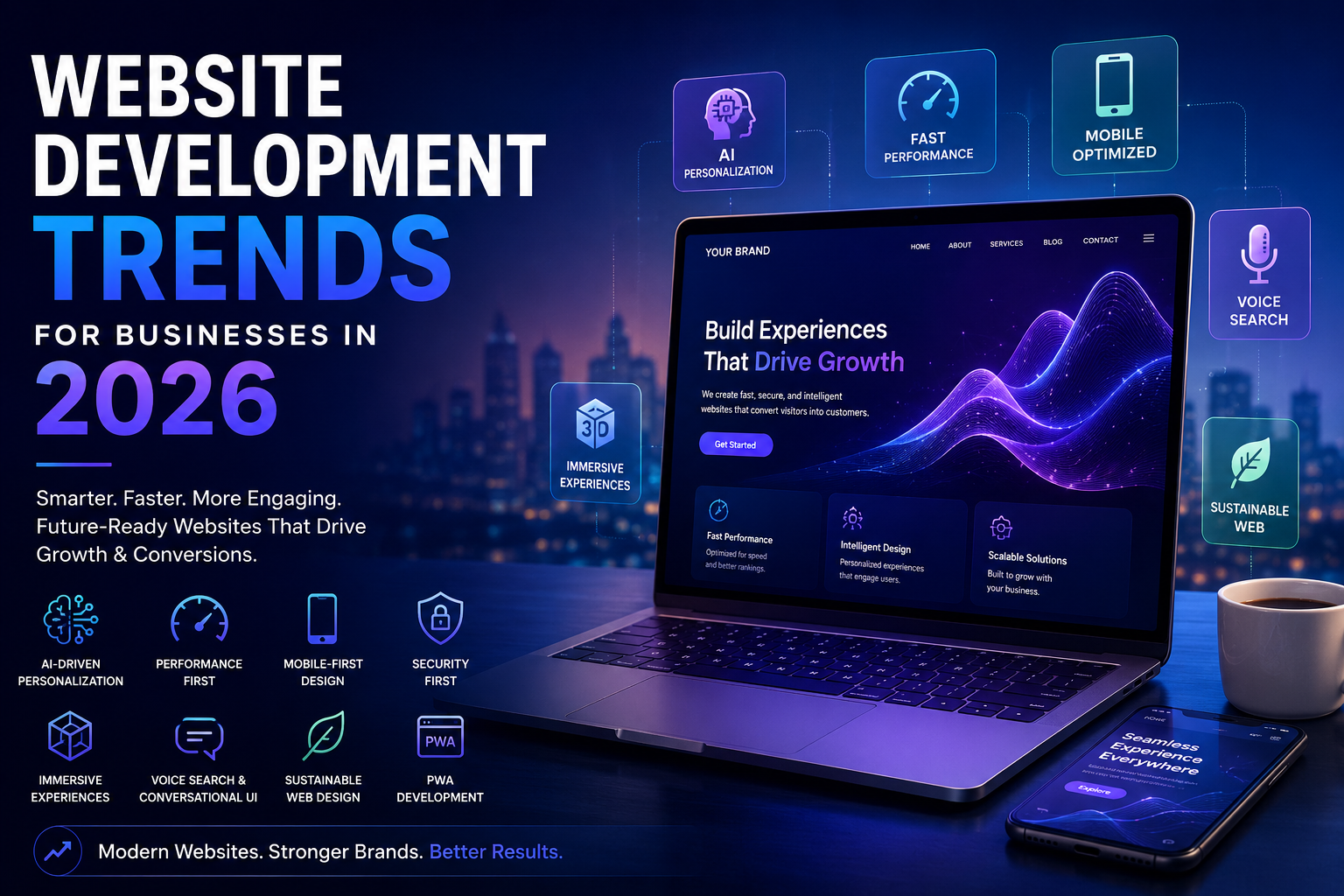
Website Development Trends for Businesses in 2026
Discover the top website development trends shaping 2026, from AI-driven personalization and immersive user experiences to performance-first design and mobile optimization. Learn how modern, conversion-focused websites help businesses improve SEO rankings, increase engagement, and drive growth with expert insights from Evander
Your website is no longer just a digital presence it’s your primary sales engine, brand identity, and customer experience hub. In 2026, businesses that treat their website as a static brochure will fall behind. Today’s users expect:
- Fast, personalized experiences
- Interactive and engaging interfaces
- Seamless performance across devices
And if your website doesn’t meet these expectations?
Users leave.
Competitors win.
The good news: staying ahead doesn’t mean chasing every trend, it means understanding which innovations actually drive engagement, conversions, and ROI. In this comprehensive guide, we’ll explore the most important website development trends shaping 2026, and how businesses especially in competitive markets like Bangalore can leverage them effectively with the expertise of Evander Marketing Private Limited.
Why Website Development Matters More Than Ever
A modern website directly impacts:
- Search engine rankings
- User experience
- Conversion rates
- Brand trust
Search engines now prioritize:
- Fast loading speed
- Mobile responsiveness
- Accessibility and usability
In simple terms better website = better rankings + more leads
Top Website Development Trends for 2026
1. AI-Driven Personalization
AI is transforming websites from static pages into intelligent, adaptive platforms.
What It Means
Websites now:
- Adapt content based on user behavior
- Show personalized recommendations
- Change layouts dynamically
Users expect websites to respond in real time to their preferences and actions
Business Impact
- Higher engagement
- Better conversion rates
- Improved customer experience
2. Performance-First Development (Speed is Everything)
Speed is no longer optional, it's critical.
Why It Matters
- Users leave if a site takes more than 3 seconds
- Google ranks faster websites higher
Best Practices
- Optimize images
- Use lightweight frameworks
- Implement caching
Performance-first design directly impacts SEO and conversions.
3. AI-Assisted Development & Automation
Developers are now using AI tools to:
- Generate code faster
- Optimize performance
- Automate repetitive tasks
AI is becoming a core part of the development lifecycle, not just a tool
What This Means for Businesses
- Faster website development
- Lower costs
- More scalable solutions
4. Immersive 3D & Interactive Experiences
Websites are becoming more engaging with:
- 3D elements
- Interactive animations
- Motion UI
These features improve storytelling and user engagement
Example Use Cases
- Product showcases
- Real estate virtual tours
- Interactive portfolios
5. Minimalism with Purpose
Minimal design is evolving.
Not Just Simple Strategic
- Clean layouts
- Focused messaging
- Better readability
Minimalism improves usability and reduces load time
6. Voice Search & Conversational Interfaces
With the rise of voice assistants, websites must adapt.
Key Features
- Voice search optimization
- Chatbots and conversational UI
- Natural language interactions
7. Mobile-First & Responsive Design
Mobile traffic dominates.
What’s Changing
- Designing for mobile first, then desktop
- Adaptive layouts for all screen sizes
Responsive design ensures seamless user experience across devices
8. Microinteractions & Motion UI
Small animations create a big impact.
Examples
- Button hover effects
- Scroll animations
- Loading indicators
These enhance user engagement and usability
9. Accessibility-First Design
Websites must be usable for everyone.
Includes
- Screen reader compatibility
- Keyboard navigation
- Clear typography
Accessibility is now a key part of modern design standards
10. Sustainability & Green Web Design
Eco-friendly websites are gaining importance.
How
- Optimized code
- Reduced server load
- Energy-efficient hosting
Sustainable design improves performance and reduces environmental impact.
11. Progressive Web Apps (PWAs)
PWAs combine the best of websites and apps.
Benefits
- Offline access
- Faster loading
- App-like experience
12. Security-First Development
Cybersecurity is a growing concern.
Key Measures
- HTTPS encryption
- Secure coding practices
- Regular audits
A secure website builds trust and protects user data.
13. Edge Computing & Faster Delivery
Websites are now delivered closer to users using edge servers.
Benefits
- Faster loading
- Reduced latency
- Better global performance
14. Bold Typography & Visual Storytelling
Design is becoming more expressive.
Trends
- Large fonts
- Dynamic text layouts
- Visual storytelling
These elements improve engagement and brand identity
15. Hyper-Personalized User Experience
Beyond basic personalization, websites now:
- Predict user needs
- Customize journeys
- Offer tailored content
This creates a human-like digital experience
How These Trends Impact Business Growth
Modern websites are not just about design they directly impact:
1. Lead Generation
Better UX = higher conversions
- SEO Rankings
Fast, optimized sites rank higher
3. Brand Trust
Professional websites build credibility
4. Customer Retention
Engaging experiences keep users coming back
Common Website Mistakes Businesses Still Make
Outdated Design
Makes your brand look unprofessional
Slow Loading Speed
Kills user experience
Poor Mobile Experience
Loses a majority of traffic
No Clear CTA
Users don’t know what to do next
Ignoring SEO
Reduces visibility
Website Development Strategy for 2026
Step 1: Focus on User Experience (UX)
Make navigation simple and intuitive
Step 2: Optimize for Speed
Performance directly impacts ROI
Step 3: Use Data & Analytics
Understand user behavior
Step 4: Integrate Marketing & Development
Your website should support your marketing goals
Step 5: Continuous Improvement
Websites are never “finished”
Why Businesses Need Professional Website Development
A professional agency ensures:
- Strategic design
- SEO optimization
- High performance
- Scalable architecture
How Evander Marketing Helps
Evander Marketing Private Limited builds websites that are not just visually appealing but performance-driven and conversion-focused.
Their Approach
- User-first design
- SEO-friendly development
- High-speed performance
- Conversion optimization
- Data-driven improvements
Real-World Impact Example
A business upgraded its website using modern trends and achieved:
- 2x increase in conversion rate
- 60% faster loading speed
- Significant improvement in SEO rankings
Future of Website Development
1. Fully AI-Powered Websites
Self-optimizing platforms
2. Hyper-Automation
Less manual work, more efficiency
3. Immersive Web Experiences
AR/VR integration
4. Data-Driven Design
Continuous improvement based on user behavior
Conclusion
If your website still looks like it did 3–4 years ago, you’re already behind. In 2026, websites are no longer just about design, they are about experience, performance, and results.
The businesses that win are the ones that build websites that:
- Think smarter
- Load faster
- Convert better
Evander Marketing Private Limited helps businesses transform outdated websites into powerful growth engines. Ready to turn your website into your top-performing sales channel? Let Evander Marketing build a future-ready website that drives real results.
FAQs
1. How often should I update my website?
Every 2–3 years, with regular updates in between.
2. What is the most important trend in 2026?
AI-driven personalization and performance optimization.
3. Are websites still important with social media?
Yes. Your website is your main digital asset.
4. Can small businesses benefit from modern websites?
Absolutely. Even small improvements can significantly boost growth.
Keep reading
social media
What Makes the Best Social Media Management Company in Bangalore ? (Real Strategies, & Results in 2026)
Discover what truly makes the best social media management company in Bangalore in 2026. Learn the real strategies, content systems, engagement techniques, analytics, and growth-focused campaigns businesses use to build stronger brands, increase reach, and drive measurable results on social media.
Performance marketing
How Small Businesses in Bangalore Can Generate Leads Online (2026 Guide)
Discover powerful digital marketing strategies to grow your business online in 2026. Learn how SEO, social media marketing, PPC campaigns, and content marketing can boost brand visibility, generate leads, and increase conversions.
Let's Scale Your Revenue.
Direct Contact
Headquarters
Bangalore
Karnataka, India
What happens next?
- ✓Analysis of your current channels
- ✓Custom roadmap presentation
- ✓No obligation, no sales pitch